An environment that arrives already wired.
A blank container is not an environment — it is the first day of work before any. Here the collections, the auth, the integrations and the agents are already there, so a new developer or a new branch starts against a working platform rather than a README and an afternoon of setup.

The unglamorous half, done properly.
Every one of these is a project on its own, and each is the kind of thing that looks finished long before it is safe.
Sign-in that will survive an audit.
Email and password, Google, Apple and Facebook, magic links, invitations, blocklists, two-factor and device management — with sessions and refresh handled for you.
- Passwordverified
- Magic linksent
- Two-factorconfirmed
- Session issuedrefresh handled
A real editor over a real backend.
Files, a terminal, a preview and an assistant that already knows what your platform exposes — so the code it writes calls your endpoints, not a mock it invented.
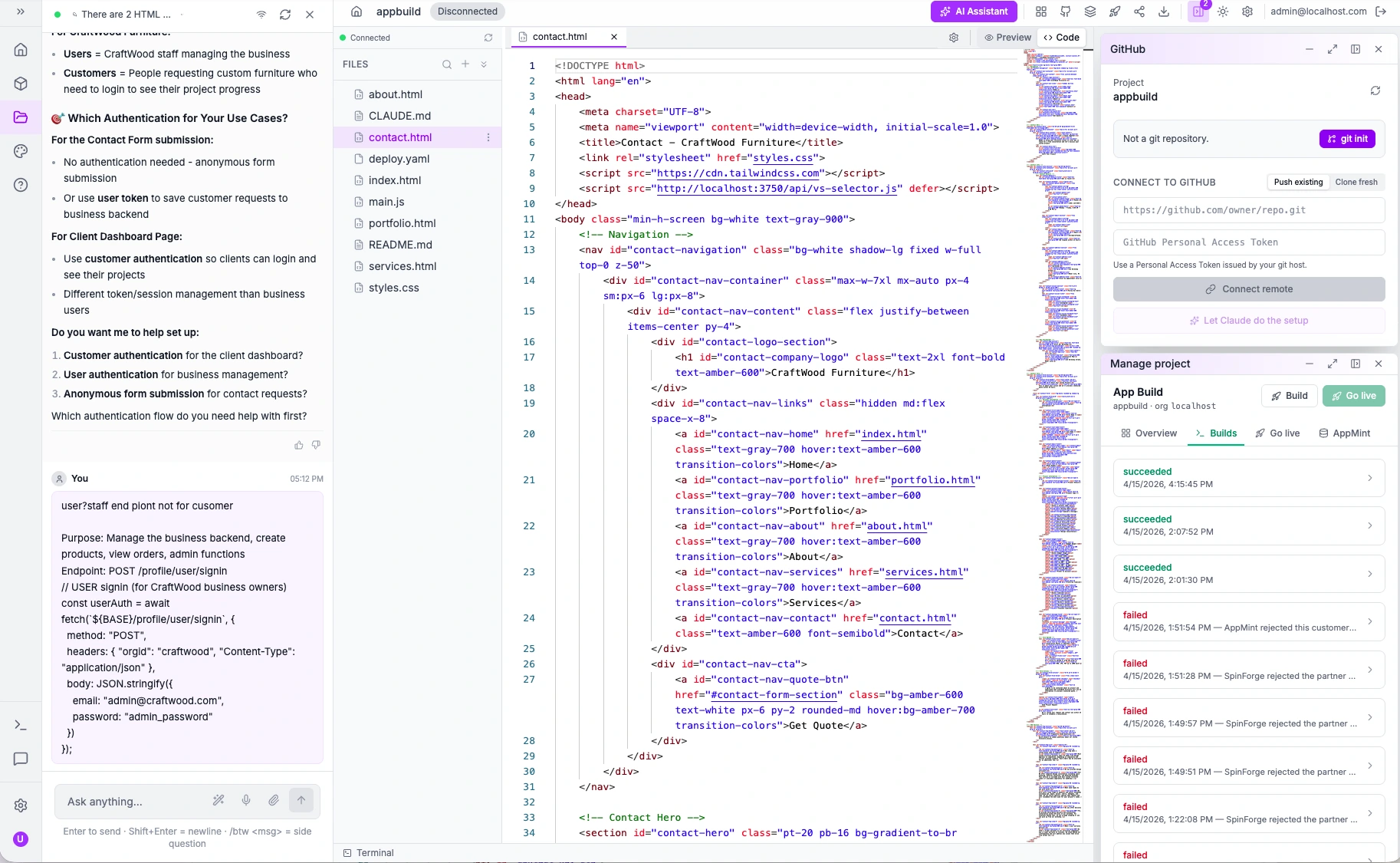
- 01It answers in your terms
The assistant separates staff from customers and asks which sign-in each surface needs — because it can see both live in the platform.
- 02The code calls your API
Generated markup posts to /profile/user/signin with the organisation header already set. Nothing to wire up afterwards.
- 03Ordinary files
HTML, CSS, JS and a deploy manifest on disk. Nothing proprietary to export from later.
Real environments, not empty ones.
Every plan includes dev environments alongside sites, so staging something never costs you a published property.
Included
- Free
- 2 environments
- Starter
- 5 environments
- Professional
- 10 environments
- Business
- 100 environments
- Enterprise
- 999 environments
In each one
- Collections
- All 238, plus yours
- Authentication
- Working, not stubbed
- Integrations
- Behind the same key
- Agents
- Callable, scoped to the env
- Seed data
- Optional, on create
Isolation
- Data
- Separate from production
- Keys
- Scoped and revocable
- Domains
- Own hostname per env
- Promotion
- Config, not a rebuild
- Teardown
- Recoverable from trash
Your backend is a set of tools before you write a prompt.
Most teams bolt an agent onto a finished API and spend months writing tool definitions by hand, then discover the model can claim to be anybody. Here, marking a method callable is enough — the platform publishes it, describes it, and injects the identity itself.
list_services → 41 callable methodsget_schema("lead") → 22 fields, 4 requiredcreate("lead", { … }) → lead_9f2aorgId + user ← injected by registry
The questions engineering leads ask.
It is created, not provisioned — the platform is already running, so a new environment is a scoped context against it rather than a stack to stand up. Nobody spends their first day reading a setup guide.